
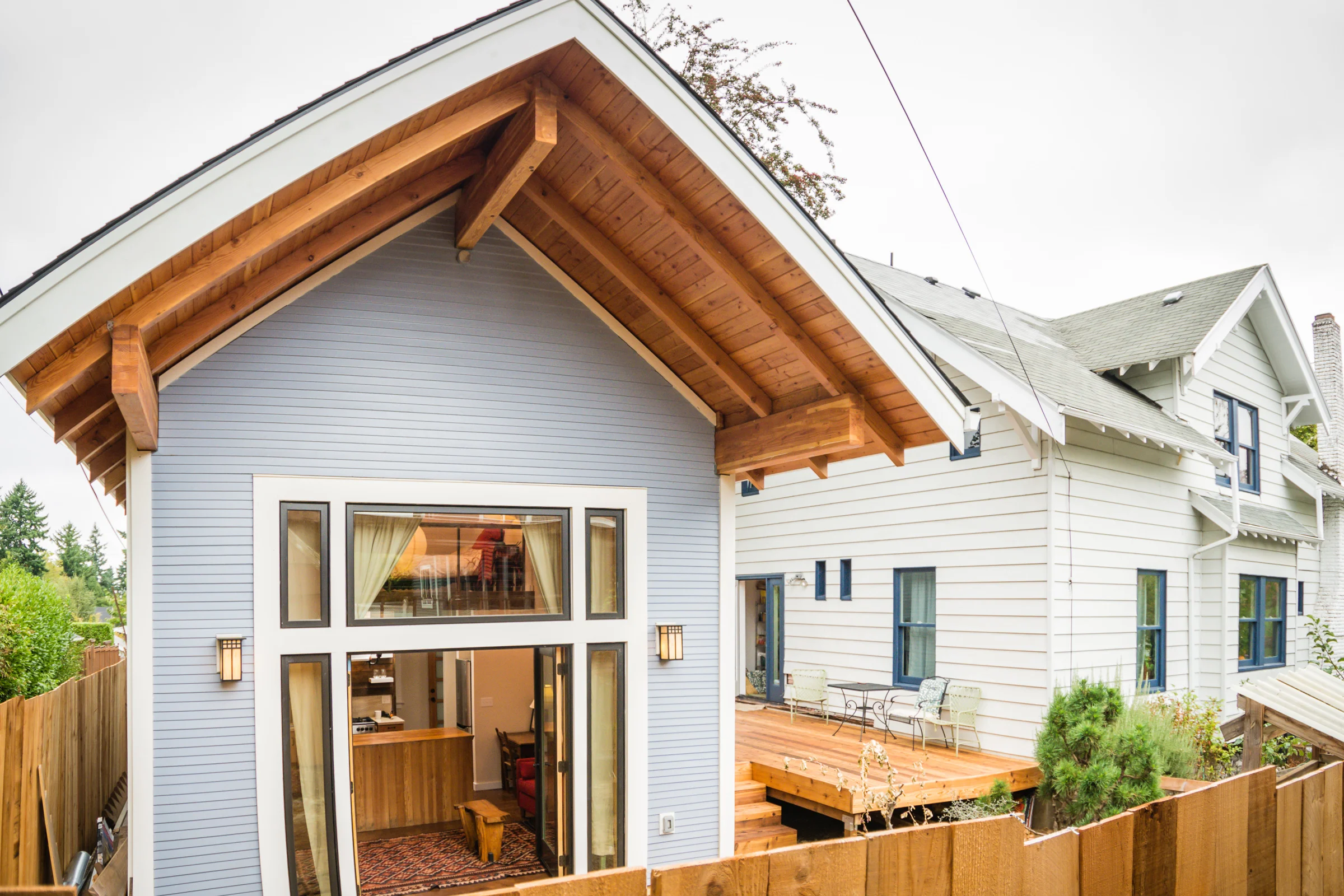
An ADU is a second, smaller home on the same lot: a backyard cottage, a garage conversion, or an attached or basement unit. Once a niche idea, it is now one of the most practical ways to add value and income to a property you already own.
Steady rental income
A long-term tenant can help cover your mortgage, property taxes or retirement costs. Where local rules allow, short-term rentals are another option.
Higher property value
Extra livable space and a separate unit with its own entrance appeal to a wide range of buyers. That flexibility can make your home stand out when you sell.
Room for family
An ADU lets aging parents live close by while keeping their independence. It also gives adult children an affordable place to save, or provides space for a live-in caregiver.
Easier approvals than before
Many cities and states have relaxed zoning, parking and fee rules to ease housing shortages. Requirements still vary widely, so check your local regulations before you start.
Flexible over time
Today it can be a home office, studio or guest suite. Tomorrow it can be a rental or a home for a family member.
What to check before you build
Local rules: size limits, setbacks, owner-occupancy requirements and short-term rental restrictions.
Utilities: water, sewer and electrical capacity are common hidden costs.
Build type: garage conversions usually cost the least, detached new builds the most, and prefab units can shorten the timeline.
Financing: home equity loans, cash-out refinancing and renovation loans are the usual routes.
Return: compare the full build cost with realistic rents in your area.
Planned well, an ADU pays you back in income, flexibility and long-term value. A local builder who knows the rules in your area is the best place to start.

